Inability to quickly build scenario forecasts based on changing source data

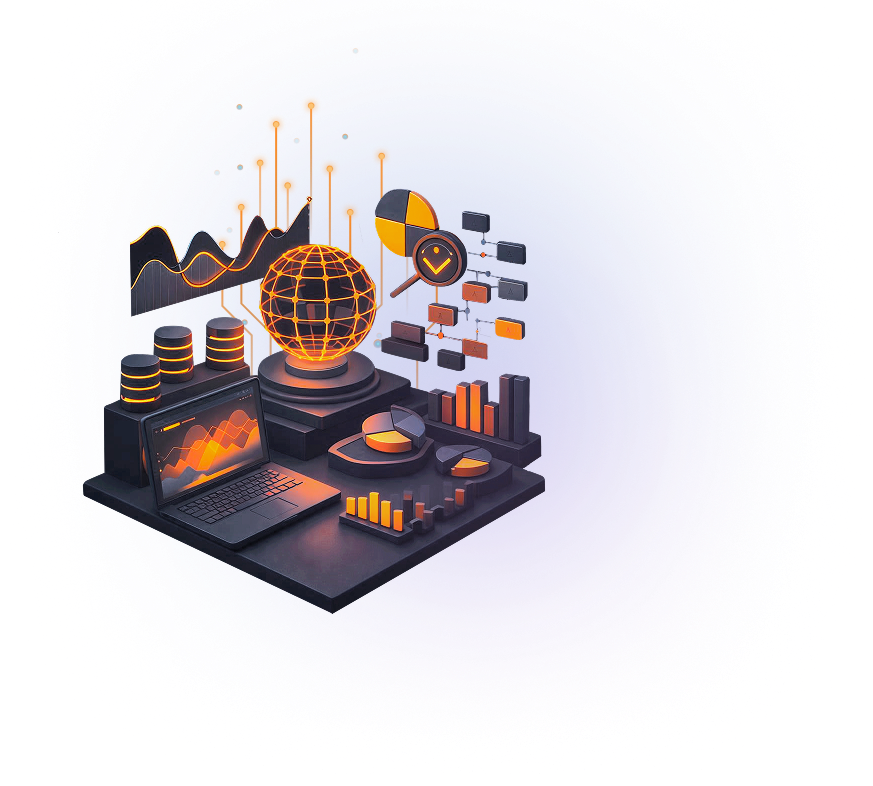
DT.Forecast — a forecasting and scenario modeling system
The digital twin software platform for building and managing forecasts uses machine learning, forecast series, scenario modeling, analytics, accuracy estimation and scenario generation for planning.
Request a proposalAbout the product
DT.Forecast is a software platform for building, managing and verifying forecasts based on interconnected calculation libraries and balance models. The product makes it possible to produce short-, medium- and long-term forecasts across an enterprise, industry or regional system of indicators, with a range of time resolutions — from seconds to years.
Learn more
DT.Forecast brings together data coming from DT.ETL and DT.Storage with balance and calculation models (DT.Balance), forming a reproducible and verifiable forecasting system.
Unlike scattered, one-off forecast calculations, the product provides:
Unlike scattered, one-off forecast calculations, the product provides:
- Consistency of forecast series across indicators;
- Automatic updating of forecasts when the source data changes;
- Estimation of forecast accuracy and confidence intervals;
- Storage of the calculation and scenario history.
Challenges
No mechanism for automatically updating forecasts when new data arrives
Insufficient integration of forecasts with the management decision-making system
Fragmented models that are not tied together by a single system of indicators
Lack of tools for assessing forecast accuracy and reproducibility
Get a personalized proposal and consultation
Describe your task and leave your contact details. We will get in touch, clarify the specifics and prepare a proposal for implementation.
 info@dtwin.city
 +381 67 776 0421
Capabilities

Automated forecast generation

Uses data from DT.ETL and DT.Storage to build linked forecast series across the system of indicators.
Mathematical calculation libraries

Computes forecasts using regression models, time series, balance relationships and custom formulas.
Scenario modeling

Builds alternative scenarios as the controllable and external factors change, with the ability to compare results.
Monitoring and deviation alerts

Tracks the gaps between actual and forecast values and automatically records and visualizes deviations.
Accuracy and confidence-interval estimation

Calculates forecast errors, confidence intervals and uncertainty ranges for each indicator.
Forecast verification and versioning

Stores the history of forecasts, model parameters and changes to the calculation algorithms to keep results reproducible.
Extensible system of indicators

Supports adding new indicators, dependencies and forecasting equations.
Methodology
The methodological basis of DT.Forecast is building a system of interconnected forecasting models, tied together through the balance structure of the data. The product ensures transparency of forecasting, the ability to analyze model sensitivity and to prepare stress scenarios. DT.Forecast serves as a management-analytics tool that allows managers to make decisions on the basis of quantitatively verifiable forecasts. The methodology for building a forecasting model includes several stages:
Defining the set of forecast indicators
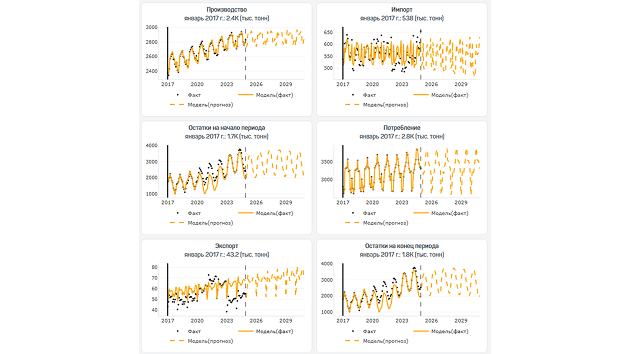
A list of indicators and their sources is compiled.
Building the relationship equations
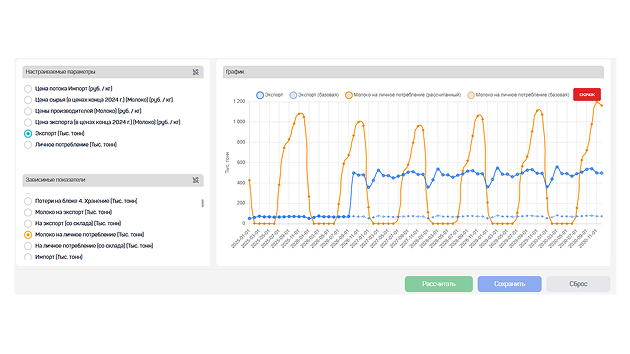
Endogenous, exogenous, controllable and uncontrollable indicators are identified, along with the dependencies between them.
Building inertial and custom forecasts
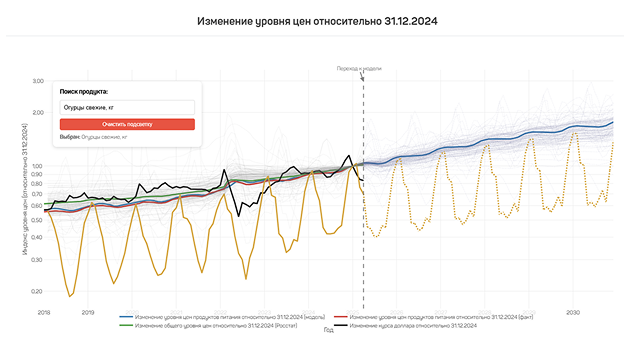
Baseline forecasts and custom scenarios with defined parameters are produced.
Refining forecasts with new data
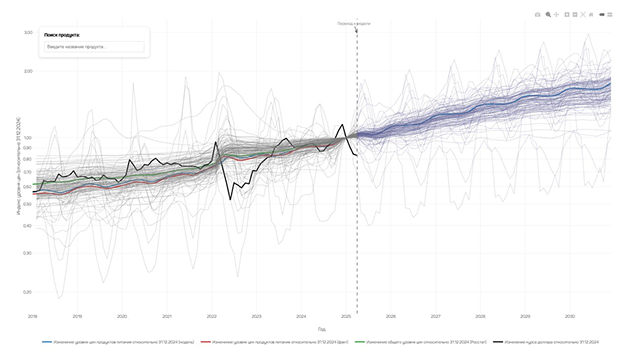
Forecasts are recalculated automatically when updated data arrives through DT.ETL.
Forecast verification and confidence intervals
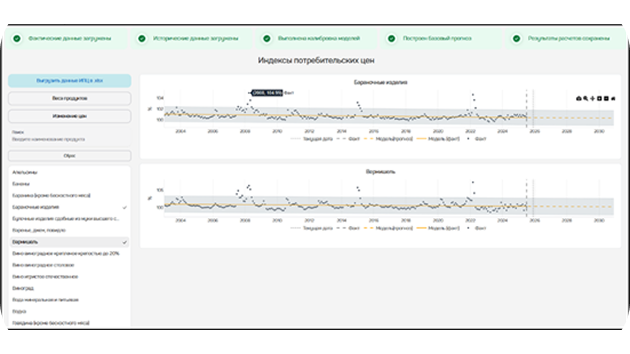
Forecast accuracy is assessed, and confidence intervals and deviation ranges are calculated.
Storing forecasts in the data warehouse
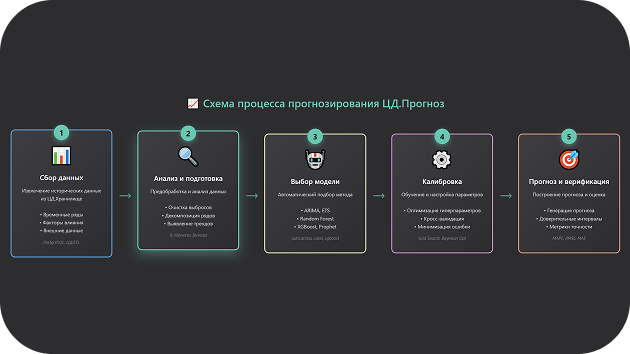
Results are stored for subsequent analysis and visualization.
Results
An integrated forecasting system covering the enterprise's key indicators
Automatic updating of forecasts when the source data changes
Verified models with accuracy and confidence-interval estimation

Scenario forecasts that account for external and management actions
A single forecast database integrated with DT.Storage and DT.Balance
Interactive visualization that displays forecast series and scenarios
Get a tailored solution
Request a proposal
Describe your task and leave a contact — we will clarify the specifics and prepare a proposal for implementing DT.Forecast at your enterprise. You can also reach us at info@dtwin.city.