Enterprise digital twin

A corporate analytics and planning system for greater resilience, efficiency and profitability of the enterprise
Learn more

An enterprise digital twin is

A tool for analysis and planning, decision support, optimization of production processes and improved profitability.

We offer a comprehensive solution for market monitoring, demand forecasting, and production and financial planning.

We bring together all your analytical materials, business metrics and local analysis tools into a single shared corporate IT system with the highest quality standards and a rich set of capabilities.

Learn more
Our approach accounts for the external context and for production optimization to drive growth and reduce risks. Our production model takes market and process analysis into account to increase revenue and resilience.

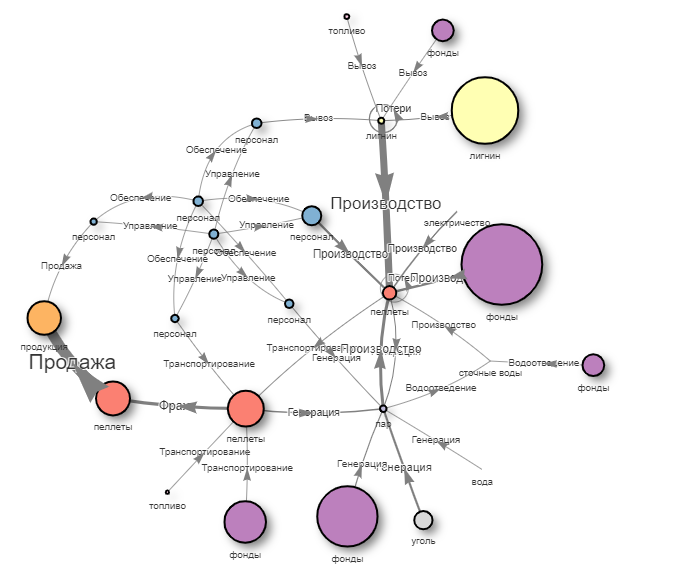
We model production as a multi-flow, dynamic model that reflects the specifics of the production process and brings it together into a single corporate analytics system with different access levels for accounts, logging and versioning, as well as clear visual support for all business processes.

Using a digital twin of the production process, we can identify bottlenecks and assess the impact of management decisions.

Our tool accounts for capacity shortages and accounts receivable, as well as the life cycle and production cycle of the enterprise.

Challenges

01

Operational inefficiency

Complex production processes can lead to inefficiencies such as production bottlenecks, underused assets, idle capacity and suboptimal allocation of resources.


02

Downtime and maintenance costs

Unplanned downtime and high maintenance costs disrupt production schedules and impact profit.

03

Complex supply-chain management

Industrial companies often face complex supply chains, which makes it harder to maintain optimal inventory levels, ensure timely deliveries and respond to market fluctuations.

04

Quality control and variability

Maintaining consistent product quality across different production cycles can be a challenging task.

05

Decision-making complexity

High-stakes decisions require accurate data and thorough analysis.

06

Market volatility and demand forecasting

Fluctuations in market demand can lead to overproduction or shortages.

We build solutions

For modeling complex socio-economic and industrial systems and infrastructure objects
Who benefits?

Energy sector

Energy sector

Aimed at optimizing operations, forecasting maintenance needs for critical equipment and ensuring efficient energy distribution.
Oil and gas industry

Oil and gas industry

Optimizing and improving drilling operations, oil refining, supply-chain logistics and predictive equipment maintenance.

Utilities

Utilities

Optimizing resource allocation, infrastructure maintenance management and forecasting of demand fluctuations.
Mining and metallurgy

Mining and metallurgy

Monitoring complex production processes supports equipment health control and optimization of the extraction process.
Industrial engineering consultants

Industrial engineering consultants

Process optimization, demand forecasting and risk management. We help reduce costs and improve efficiency.

Capabilities

A manager wants the business to run like a finely tuned machine. Our product helps you achieve that goal, ensuring the reliability and integrity of your enterprise through a systematic approach.

01 Market monitoring and forecasting
Forecasting demand, supply and product prices optimizes production planning and resource allocation, ensuring sustainable growth aligned with market requirements.
02 Asset portfolio management
A flow-based financial model improves asset organization, reduces risks and maximizes profit, providing valuable insights for making informed investment decisions and effective trading strategies.
03 Production optimization
Identifying and eliminating bottlenecks and suboptimal chains makes it possible to improve the quality of the finished product and minimize total production costs.
04 Risk management
A comprehensive model that covers both production operations and the market context improves the decision-making process, reduces potential losses and helps prevent a slowdown in production growth.
05 Improving maintenance efficiency
Monitoring the integrity of pipelines, logistics and production systems to minimize repairs and incidents, thereby reducing operating costs and risks.

Want to learn more?

Please get in touch with us or fill out the form on our website, and we will arrange a free consultation on your tasks.

We will be glad to help you improve the efficiency of your business.

Let's take the first step toward your success together.

Mathematical models for solving problems

Mathematical models are tools that help us understand and solve problems across a wide range of fields. They can be built from a combination of physical principles and mathematical equations, as well as research findings in areas such as economics or energy.

Advanced methods such as neural networks and deep learning are also used to find the most effective solutions to complex problems.
Market models
Market models
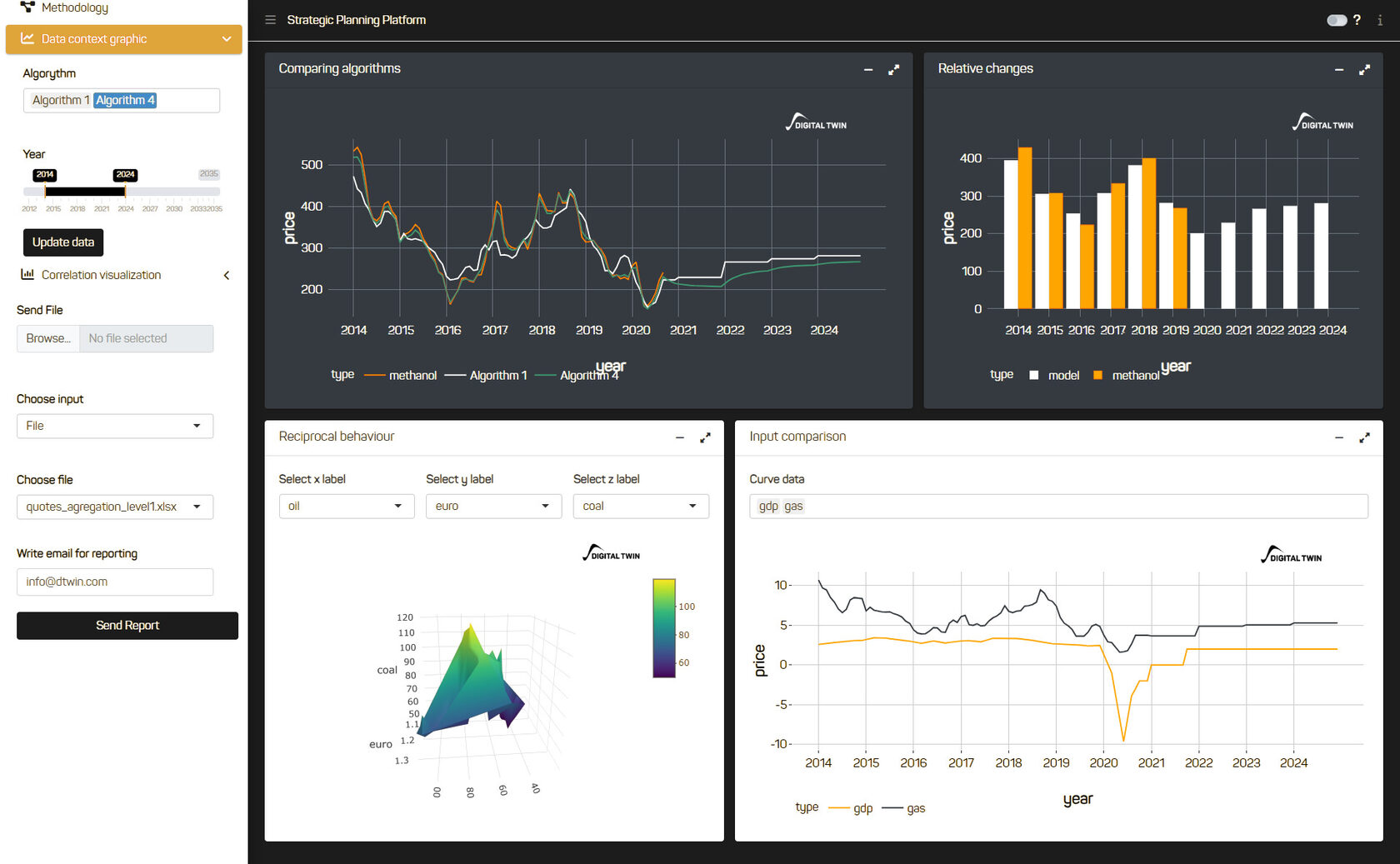
Market models are based on a factor analysis of relationships that makes it possible to assess the dynamics of supply and demand. They make cost forecasting easier and allow production volumes to be adjusted, taking into account the enterprise's processes and capacity, and to build a sales and supply plan. The model addresses the task of monitoring and scenario-modeling the development of markets for finished products, raw materials, materials and labor.

The model also makes it possible to effectively assess the payback and adoption of technology replacements in the production cycle. This allows enterprises to adapt to unpredictable market changes while remaining competitive.
Optimizer
Optimizer
1. BUILDING PRODUCTION CHAINS
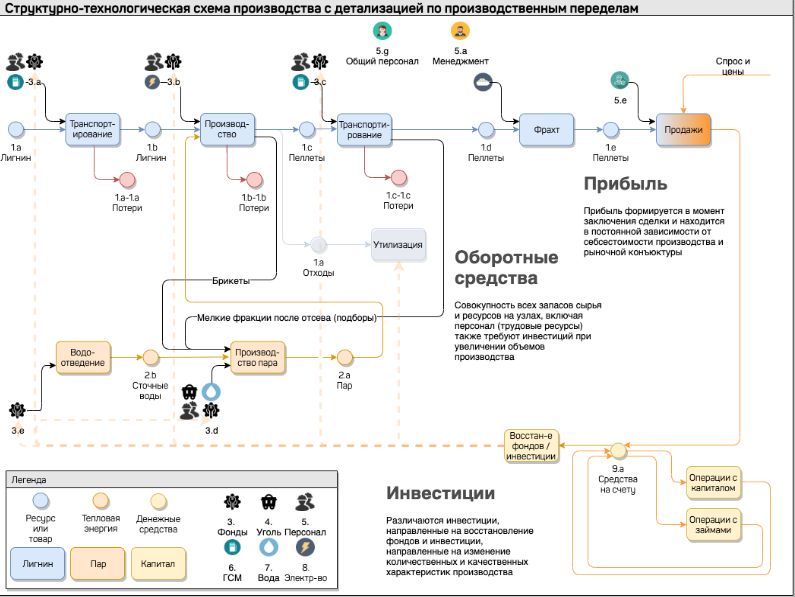
Production chains are obtained from the customer and enriched with actual data at various levels. From these, balance matrices over time are built for each individual chain and for the entire production as a whole, broken down by product

2. DEFINING THE OBJECTIVE FUNCTION
By defining the desired product mix and cost structure, a balance model can be built that helps assess the final resources and balance the production functions. This also makes it possible to determine the equilibrium price and the expected margin of the products based on the price and demand forecast.

3. IDENTIFYING CONSTRAINTS
To optimize the plans, it is necessary to identify the constraints that may affect the production process and its result. Structural and process diagrams help account for capacity constraints and determine the cost of each finished product. The equations of the balance model provide a wide range of constraints

4. OPTIMIZING THE PLANS
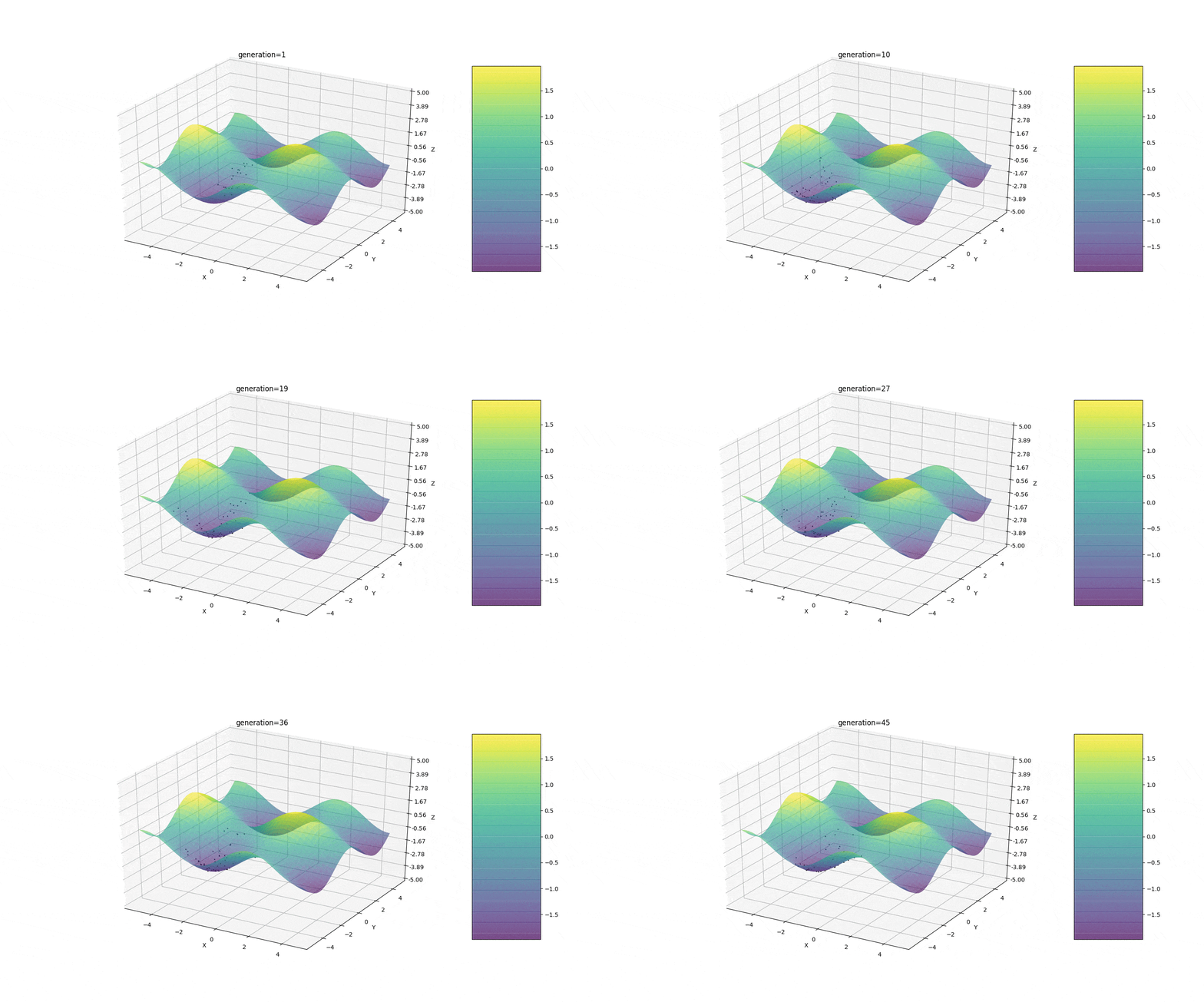
A CPLEX-like solver, enhanced by the Digital Twin team with a warm start and pre-computed coefficients, is used for optimization. Balance tables make it possible to reduce the calculations to fast matrix multiplication. The balance model helps assess the resources available for producing the finished product across all chains, which improves the accuracy of the production function. The constraints created within the balance model reduce the search space for the solution.
Enterprise financial models
A financial model is a comprehensive tool that makes it possible to assess the current state of an enterprise and forecast its future activity. It includes a wide range of indicators that evaluate the enterprise's financial flows, including revenue, cash flows and profit. With its help, you can determine the impact on its financial position of both external factors, such as market changes, and internal ones, such as changes in the company's operations.

The financial model addresses the task of assessing asset performance, accounting for resources and building a financial plan, and it also makes it possible to optimize production costs, including logistics and production processes. It treats production as a flow-based, balanced and multi-point dynamic model, which helps maintain the right balance between production and consumption capacity, preventing under-loading and overloading of production facilities.
Management of the efficiency and risks of financial and economic activity
A system that makes it possible to assess potential financial losses and determine the level of risk associated with asset management, including stocks, bonds and other types of investments. The model accounts for accounts receivable and tracks underused and overused assets to increase revenue and strengthen the stability of the business. The model is based on the principle of representing production as a dynamic system with many balanced flows. Such a system not only reduces risks but also optimizes efficiency through careful process modeling.
Capacity and investment model
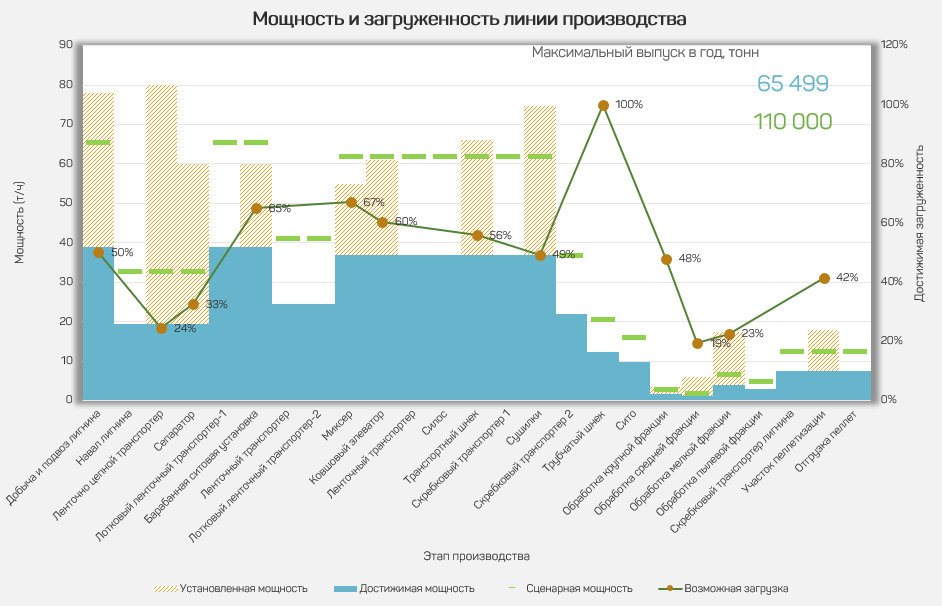
Overcoming shortages and surpluses of production capacity is the core task of this model, which evaluates all elements of the production process. Based on an analysis of the balance of production capacity, it is possible to determine the degree of under-use and over-use of production. This makes it possible to define optimal strategies for optimizing the process chains.

The assessment of a shortage or surplus of production capacity starts from consumers and takes their needs into account. Using the market model, a realistic sales forecast can be built and you can understand how much capacity is needed to meet demand, taking into account the process flow and losses. With this information, the model helps plan the construction of new elements to reliably meet demand, thereby improving the financial efficiency of the business.

In addition, the model includes a program for monitoring and managing the condition of assets, making it possible to increase production capacity and reduce potential risks.
Resource balance model
The asset resource balance model provides deep analysis in both physical and monetary terms to calculate the equilibrium cost of resources. It serves as a tool for planning and controlling all stages of the production process.

An additional advantage of the model is the ability to optimize production costs for logistics and production processes, which also helps increase the likelihood of achieving the company's financial goals.

The resource model treats production as a balanced and multi-flow dynamic model, making it possible to account for many variables and adapt to changing market conditions.

Forms of the result

We offer various ways of working with us, allowing you to choose the most effective option in terms of time and cost. The initial consultation is free of charge.

Consultations

Consultations

Analytics platform

Analytics platform

Analytical report

Analytical report

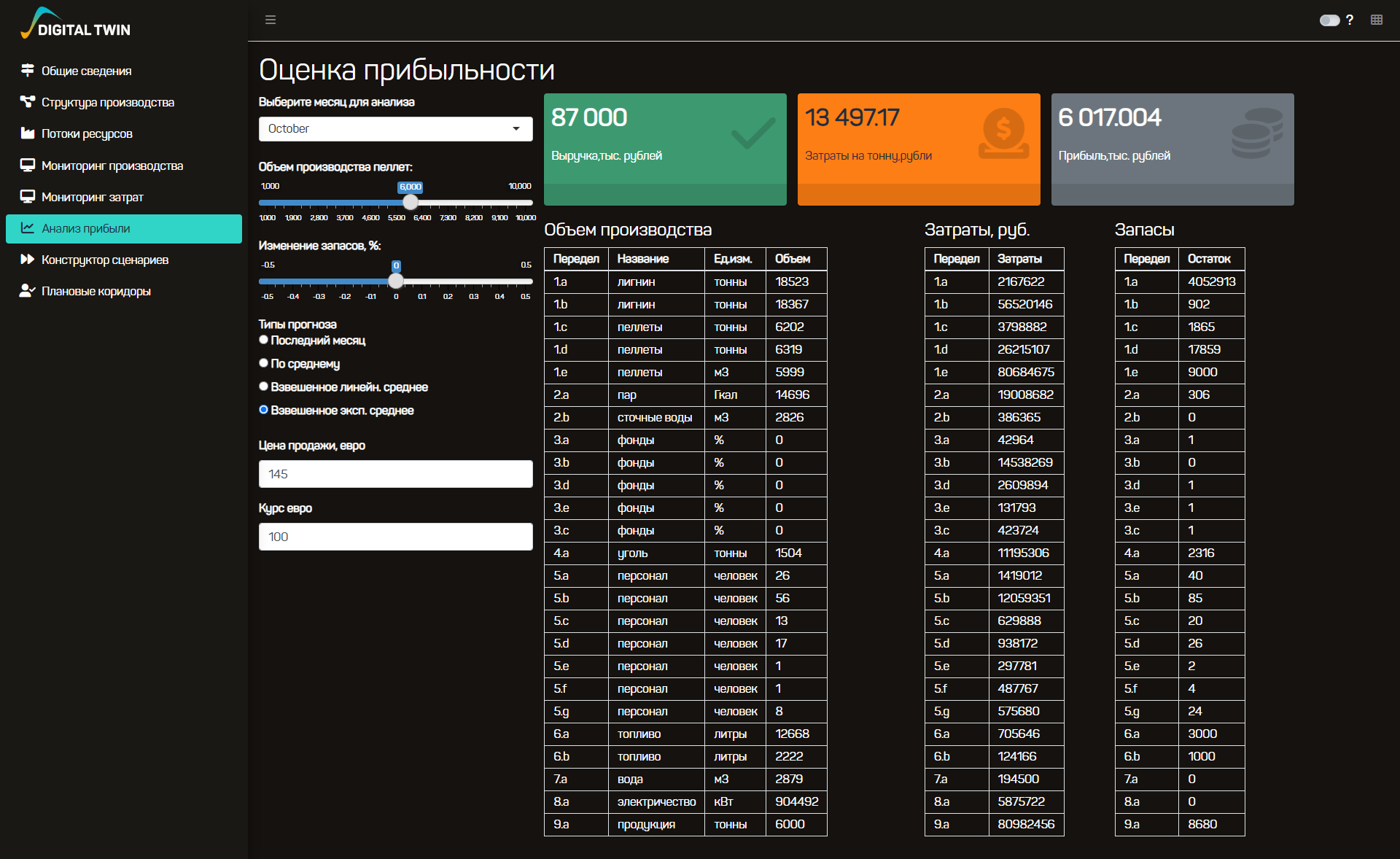
Interactive dashboard

Interactive dashboard

Outsourced specialist

Outsourced specialist

Deliverable model (API)

Deliverable model (API)

Let's discuss your tasks

Schedule a consultation today to find out how we can help you.

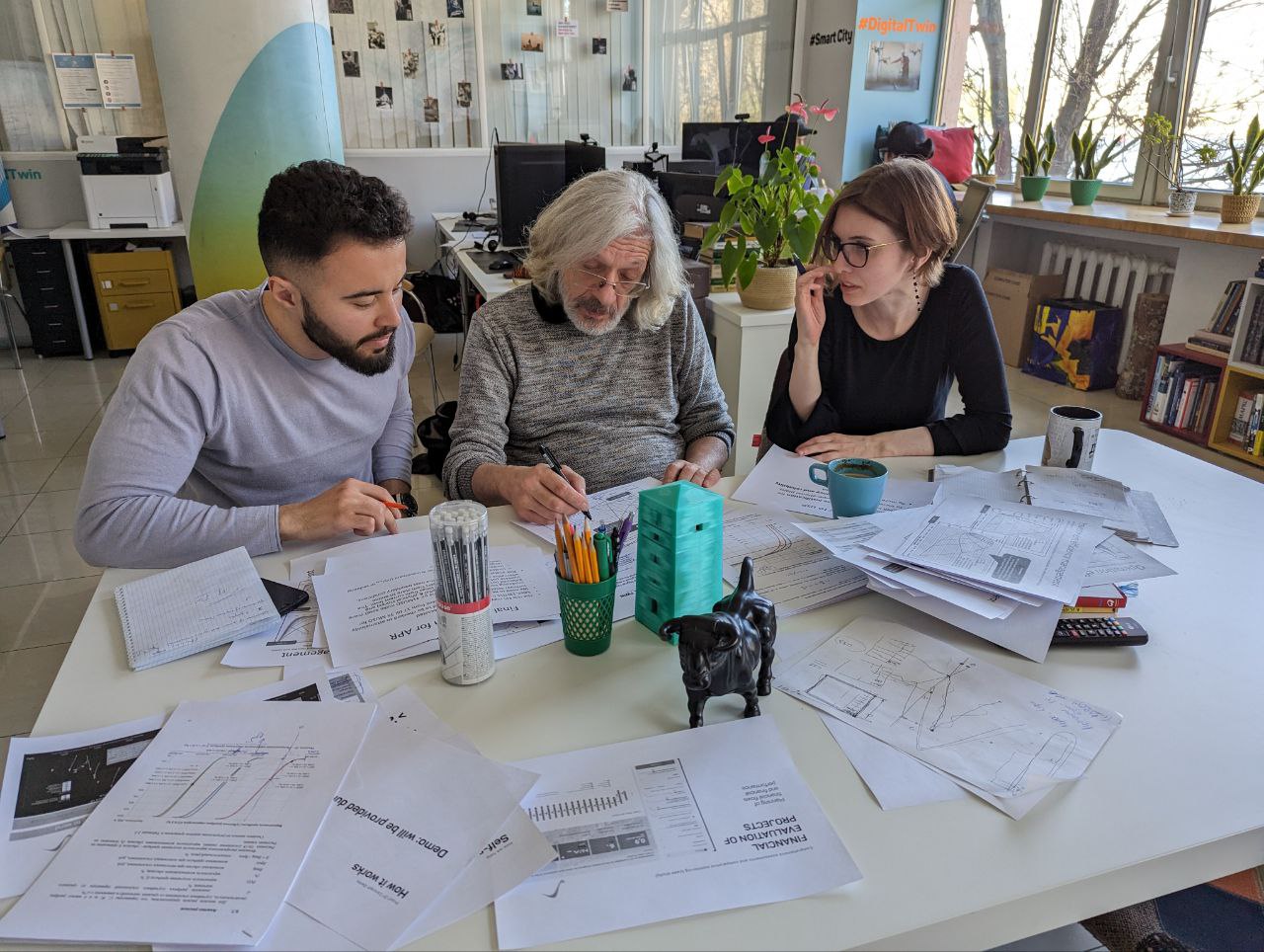
With more than 15 years of experience, our team of experts has helped many companies improve the efficiency of their business.
How do we solve problems?

01 Diving into the task
Together, we assess the scope of the project and agree on your pain points and the methods for solving them.
02 Data collection
We assemble a base of source production information, combining structural, process and logistics diagrams with real-time market data.
03 Using or building models
We develop, refine and calibrate a unique combination of models with great attention to detail.
04 Providing control functions
These functions make it possible to monitor, evaluate and identify bottlenecks. Such functions provide insight into market dynamics, production efficiency and financial planning, paving the way forward.
05 Updating the data
Our solutions integrate easily with your data sources, ensuring real-time relevance and helping to build a dynamic decision-making ecosystem.
06 The result
We deliver the result in a form convenient for you, whether that is a PDF report, an interactive web platform or a computational API.

Contact us

Request a proposal

Describe your task and leave a contact — we will clarify the specifics and prepare a proposal for implementing the enterprise digital twin at your company. You can also reach us at info@dtwin.city.