Scattered data sources with no mechanism for keeping them synchronized

DT.ETL — the enterprise data pipeline
A digital twin product that automates the collection, transformation and delivery of data between systems (ETL). It ensures reproducible processing with logging and versioning, and lays the foundation for analytics and for retraining enterprise models.
Request a proposalAbout the product
DT.ETL (Extract-Transform-Load) is a pre-configured digital twin pipeline that provides automated extraction, transformation and loading of data from heterogeneous sources within a single enterprise architecture. The product is designed for the continuous integration and updating of data without disrupting existing IT systems or business processes.DT.ETL removes the key limitations of traditional approaches to data processing: scattered sources, manual update operations, incompatible formats and the absence of change control. The pipeline brings together data from databases, file systems, sensors and external APIs, keeping it synchronized with the data warehouse and the analytical modules of the digital twin.
Learn more
The product is built on the principles of transparency, reproducibility and scalability of data processing. Every extraction, transformation and loading operation is recorded, versioned and can be reproduced together with its source, timing and processing parameters. This establishes trust in the data and makes it possible to use it in analytical, balance and forecasting models.
DT.ETL integrates with the platform products DT.Storage, DT.Balance and DT.Marts, creating an end-to-end data flow from primary sources to computational models and analytical views. This approach makes it possible to update calculations and forecasts promptly whenever the source data changes, and keeps indicators consistent across every level of management.
DT.ETL integrates with the platform products DT.Storage, DT.Balance and DT.Marts, creating an end-to-end data flow from primary sources to computational models and analytical views. This approach makes it possible to update calculations and forecasts promptly whenever the source data changes, and keeps indicators consistent across every level of management.
Challenges
No control over data changes, versions or sources
Forecasting and balance models cannot be updated promptly when the source data changes
Incompatible data formats that hinder integration and analytical processing
Manual, irregular processes for updating and recalculating information
Get a personalized proposal and consultation
Describe your task and leave your contact details. We will get in touch, clarify the specifics and prepare an implementation proposal.
 info@dtwin.city
 +381 67 776 0421
Capabilities

Data extraction (Extract)

Connecting to sources: databases, file systems, sensors and APIs. The system receives updates automatically and on a regular basis.
Data transformation (Transform)

Cleansing, filtering, normalization and merging of data according to predefined models. Data streams are brought into the structures of the digital twin.
Data loading (Load)

Publishing the updated data to DT.Storage and to DT.Marts data marts for analytics, visualization and reporting.
Logging and versioning

The system records every operation and data change, which makes it possible to reproduce calculations and trace the sources of any discrepancies.
Scaling the pipelines

New sources and processors can be added without interrupting operations.
Scheduled and event-driven launch of processing jobs

Data processing is triggered on a schedule or whenever the sources change.
Methodology
The DT.ETL methodology is based on the reproducibility and transparency of every data-processing step. All operations are recorded, and the results can be restored or repeated taking the change history into account. This approach ensures the continuity of data between systems and makes it possible to reproduce calculations, forecasts and scenarios with all updates applied. DT.ETL is the technological bridge between data warehouses, planning systems and analytical modules.The methodology for building and running the ETL pipeline comprises several stages:
Mapping the data sources and their attributes
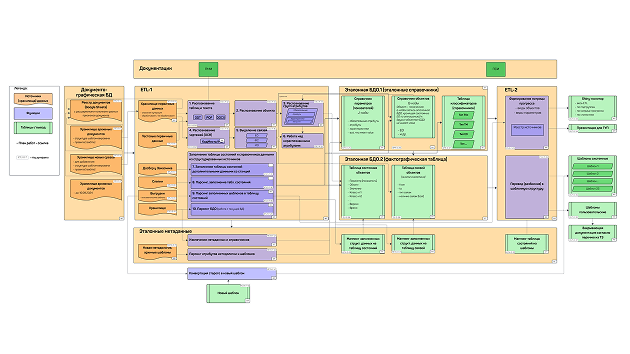
All sources are identified, and their structures, attributes, formats, update frequency and technical constraints are recorded. Based on the information gathered, a complete map of data flows is produced, which becomes the foundation for the ETL pipeline.
Configuring the extraction and loading pipelines to match the source formats
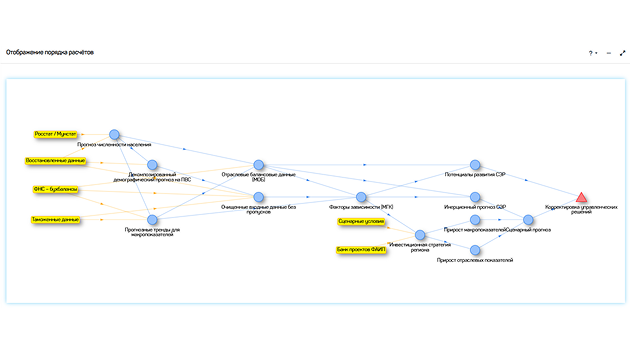
The pipelines are adapted to the type of source: databases, APIs, file storage or sensors. Connection methods, extraction intervals and the rules for subsequent loading are defined.
Developing transformation rules, including filtering, aggregation and data normalization
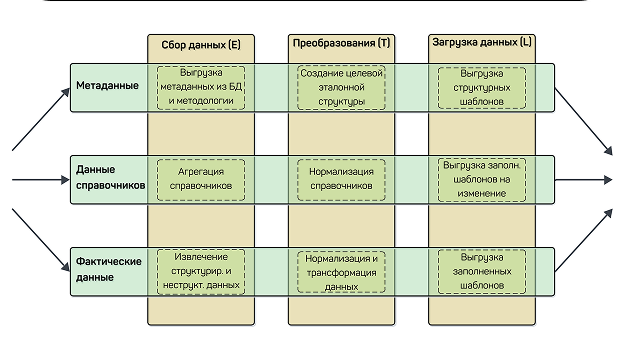
Rules are defined for cleansing, filtering, removing duplicates, converting formats, aggregation and normalization to fit the digital twin model.
Cleansing, verification and bringing the data to a single format (normalization to 6NF)
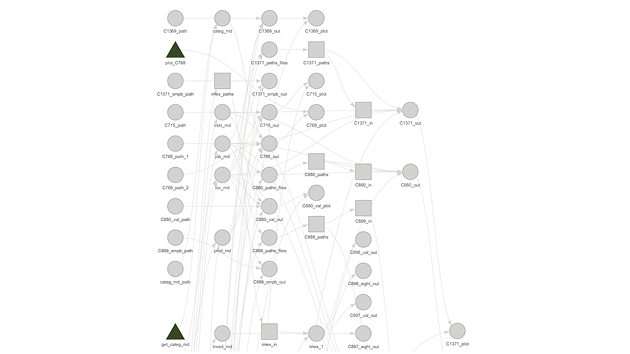
Every operation and data change is recorded: what changed, when, for what reason and from which source the information came. A transparent, detailed processing history is produced.
Building a cycle of automatic data updates whenever the sources or algorithms change
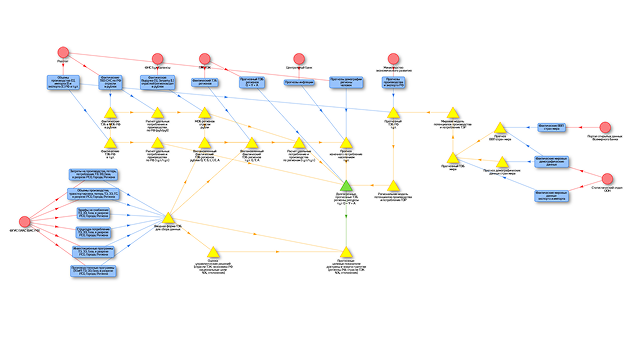
The pipeline responds to changes in data, schemas or algorithms and recalculates the results without manual intervention.
Establishing relationships between entities and building aggregated views for analytics and reporting
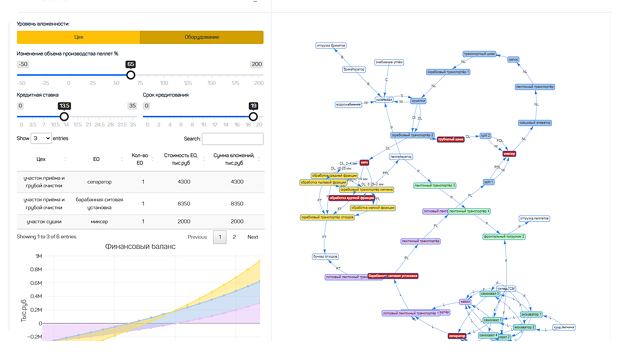
The system monitors the state of the pipelines, execution time, data volume and the correctness of processing. If errors or delays occur, the system notifies the responsible specialists.
Results

An automated data pipeline that delivers transparent extraction, transformation and loading of information

Integration of all enterprise data sources into a single digital architecture
Logging and versioning of all operations and data changes

Data made ready for analysis, modeling and forecasting
A faster update cycle for analytical models and higher-quality management decisions
Get a tailored solution
Request a proposal
Describe your task and leave a contact — we will clarify the specifics and prepare a proposal for implementing DT.ETL at your enterprise. You can also reach us at info@dtwin.city.